Russian Revolution
The Birth of the Soviet Union
1905–1924 · From Bloody Sunday to the Death of Lenin
140M
Russian Population 1917
80%
Peasant Population
3.3M
Russian WWI Deaths
1905
First Revolution
Causes of the Revolution
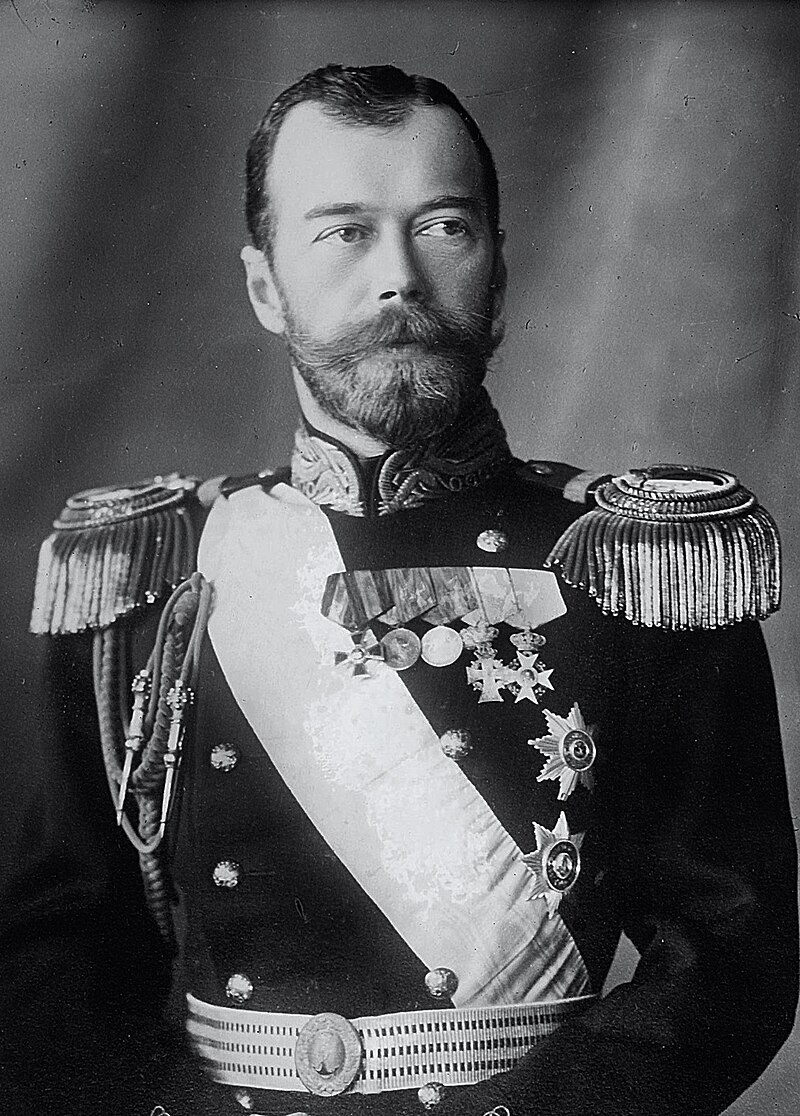
Tsarist Autocracy
Nicholas II · Absolute Rule
Nicholas II ruled Russia as an absolute autocrat, refusing all meaningful reform. His own words sealed his fate: "I shall never agree to a representative form of government." While Europe modernized, Russia's political structure remained medieval.
Russo-Japanese War 1905
Far East Humiliation · Revolutionary Catalyst
Russia's catastrophic defeat by Japan in 1905 shattered the myth of Tsarist invincibility. The loss of the Pacific Fleet at Tsushima and surrender of Port Arthur shocked the nation and fueled revolutionary sentiment. A tiny Asian nation had humiliated the Russian Empire.
Bloody Sunday 1905
January 22, 1905 · 1,000 Dead
Father Gapon led 200,000 peaceful workers to the Winter Palace with a petition for better conditions and political rights. Tsarist troops opened fire without warning, killing over 1,000. The day permanently severed the peasants' bond of loyalty to the Tsar.
World War I Catastrophe
1914–1917 · Empire Breaking
Russia mobilized 15 million men and suffered 3.3 million dead — the highest losses of any combatant. The economy collapsed under war strain. Soldiers mutinied at the front. Supply chains failed. By 1917, entire army units were surrendering or simply walking home.
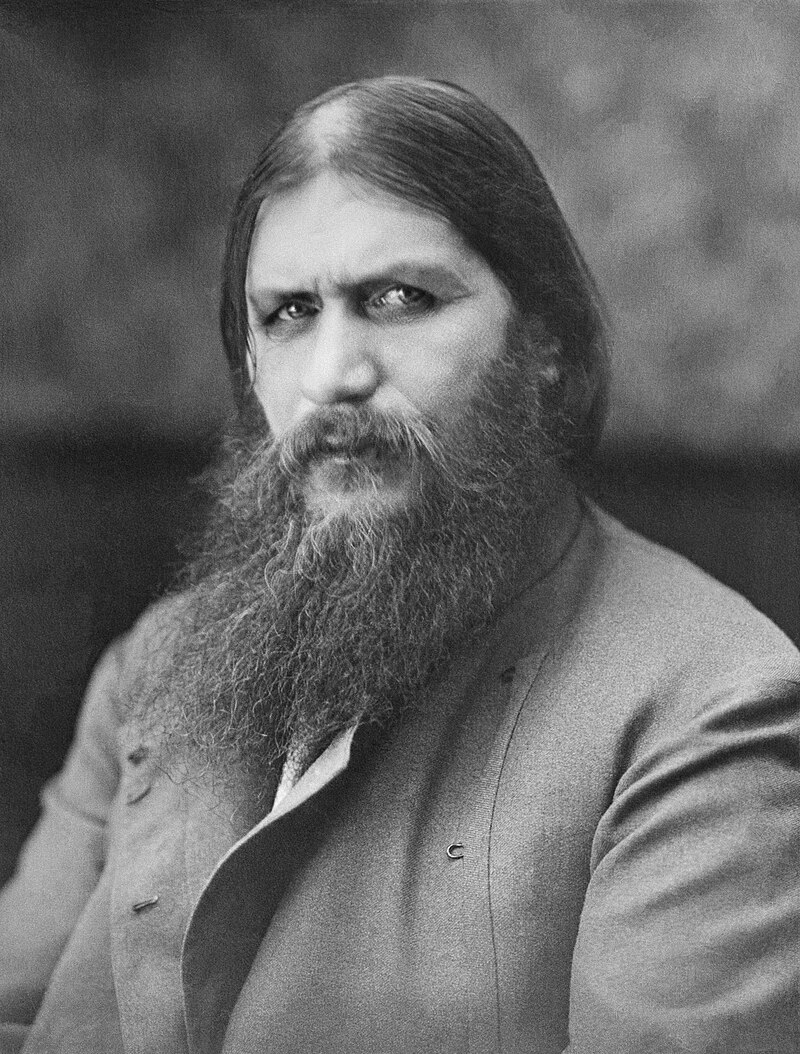
Rasputin's Influence
The Mad Monk · Regime Discredit
Grigori Rasputin, a Siberian mystic, gained extraordinary influence over Tsarina Alexandra through his apparent ability to ease Tsarevich Alexei's hemophilia. His control over court appointments and dismissals — and his scandalous reputation — destroyed the regime's remaining credibility.
Food Shortages & Bread Riots
Petrograd 1917 · Starvation Catalyst
By February 1917, Petrograd's bread rations had collapsed. Factories shut down for lack of fuel. Workers poured into the streets not for ideology but from hunger. International Women's Day 1917 became the spark: women workers marched for bread and it ignited the revolution.
1917 — The Revolutionary Year
Feb 23
International Women's Day bread riots in Petrograd. Women textile workers walk off the job and march through the streets demanding bread. Other workers join. The revolution has begun, though no one yet knows it.
Feb 25
General strike in Petrograd; troops refuse to fire on crowds. The Tsar orders the army to suppress the demonstrations. Soldiers of the Pavlovsky Regiment mutiny and shoot their own officers rather than fire on workers. The regime's military instrument is broken.
Feb 27
Duma forms Provisional Government; Soviet also formed — Dual Power begins. The State Duma establishes a Provisional Government. Workers and soldiers simultaneously form the Petrograd Soviet. Two competing power centers now govern Russia simultaneously.
Mar 2
Tsar Nicholas II abdicates. Deserted by his generals and facing revolution in the capital, Nicholas II signs his abdication aboard his imperial train at Pskov. 304 years of Romanov rule ends in a railway carriage. His brother Michael refuses the throne.
Apr 3
Lenin returns from exile — Germany's "sealed train." Germany, hoping to destabilize Russia and knock it out of the war, arranges Lenin's transit from Swiss exile to Petrograd in a sealed railway carriage. He arrives at Finland Station to a hero's welcome from the Bolsheviks.
Apr 4
Lenin's April Theses: "All power to the Soviets!" Lenin immediately rejects cooperation with the Provisional Government. His April Theses demand immediate peace, land redistribution, and transfer of all power to the soviets. Even his own Bolshevik Party is shocked by the radicalism.
July
"July Days" — premature uprising crushed; Lenin flees to Finland. Bolshevik-influenced soldiers and workers launch a spontaneous uprising. The Provisional Government — now led by Kerensky — suppresses it. Lenin is branded a German spy and flees to Finland in disguise. The Bolsheviks appear finished.
September
Kornilov Affair: General attempts coup; Bolsheviks arm workers. General Kornilov marches on Petrograd to establish a military dictatorship. Kerensky — desperate — releases Bolshevik prisoners and arms their Red Guards to stop Kornilov. The coup fails. The Bolsheviks emerge stronger than ever.
Oct 25
Bolshevik coup: Winter Palace stormed; Provisional Government arrested. Red Guards and sailors seize Petrograd's key points overnight. The cruiser Aurora fires a blank shot as signal. The Winter Palace falls. The Provisional Government is arrested. Lenin announces Soviet power to the Congress of Soviets.
November
Bolsheviks win elections to soviets across Russia. Soviet elections confirm Bolshevik dominance in the major cities. However, elections to the Constituent Assembly (Nov 12) give the Socialist Revolutionaries a majority — an inconvenient fact Lenin will resolve by dissolving the Assembly in January 1918.
Russian Civil War · 1918–1921
The Reds vs. The Whites
Bolsheviks vs. Anti-Communists
The Bolshevik Red Army faced the loose coalition of White Armies — monarchists, liberals, Socialist Revolutionaries, and foreign-backed forces. The Whites' fatal weakness: they could not unite behind a single leader or program. The Reds had a single ideology, a single command, and Lenin's ruthless will.
Leon Trotsky
Commissar of War · Army Builder
Trotsky built the Red Army from almost nothing to 5 million soldiers in three years. He traveled the front in his famous armored train, personally rallying troops, shooting deserters, and turning defeats into victories. Without Trotsky, the Bolsheviks would likely have lost the Civil War.
The Romanov Execution
July 17, 1918 · Yekaterinburg
Nicholas II, Tsarina Alexandra, their five children, and four servants were shot in the basement of the Ipatiev House as White Army forces approached Yekaterinburg. The Bolsheviks feared the Tsar becoming a rallying symbol for the Whites. The bodies were buried in secret and not identified until 1991.
Foreign Intervention
14 Nations · Supporting the Whites
Britain, France, the United States, Japan, and 10 other nations sent troops and massive supplies to support the White Armies. The intervention was ultimately half-hearted and poorly coordinated, but it allowed Bolshevik propaganda to frame the Civil War as a patriotic struggle against foreign imperialism.
War Communism
Forced Requisition · Famine
To feed the Red Army, the Bolsheviks instituted "War Communism" — armed detachments forcibly seized grain from peasants. Industry was nationalized and money abolished. The result was economic catastrophe and famine that killed 5 million people in 1921–22. Lenin was forced to reverse course with the NEP.
Red Terror
Cheka · 1918–1921
Felix Dzerzhinsky's Cheka secret police waged systematic terror against "class enemies" — aristocrats, priests, landowners, and political opponents. Estimates of executions range from 100,000 to 500,000. Thousands more died in concentration camps. The precedent for Stalin's later mass terror was established here.
Key Figures
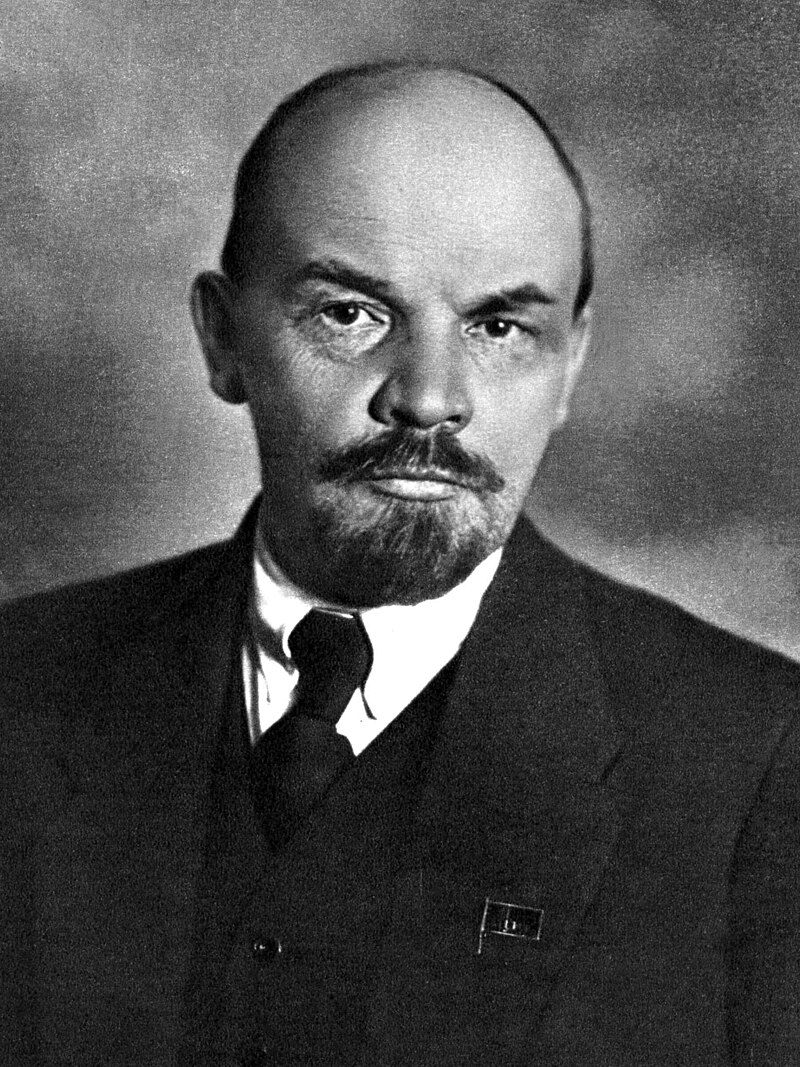
Vladimir Lenin
Bolshevik Leader · 1870–1924
Intellectual architect of the revolution. Spent years in Siberian exile and European emigration refining Marxist theory, building the Bolshevik party, and waiting for his moment. Returned in April 1917 and within seven months had seized power. Built the Soviet state and the Communist International before dying of strokes in 1924.
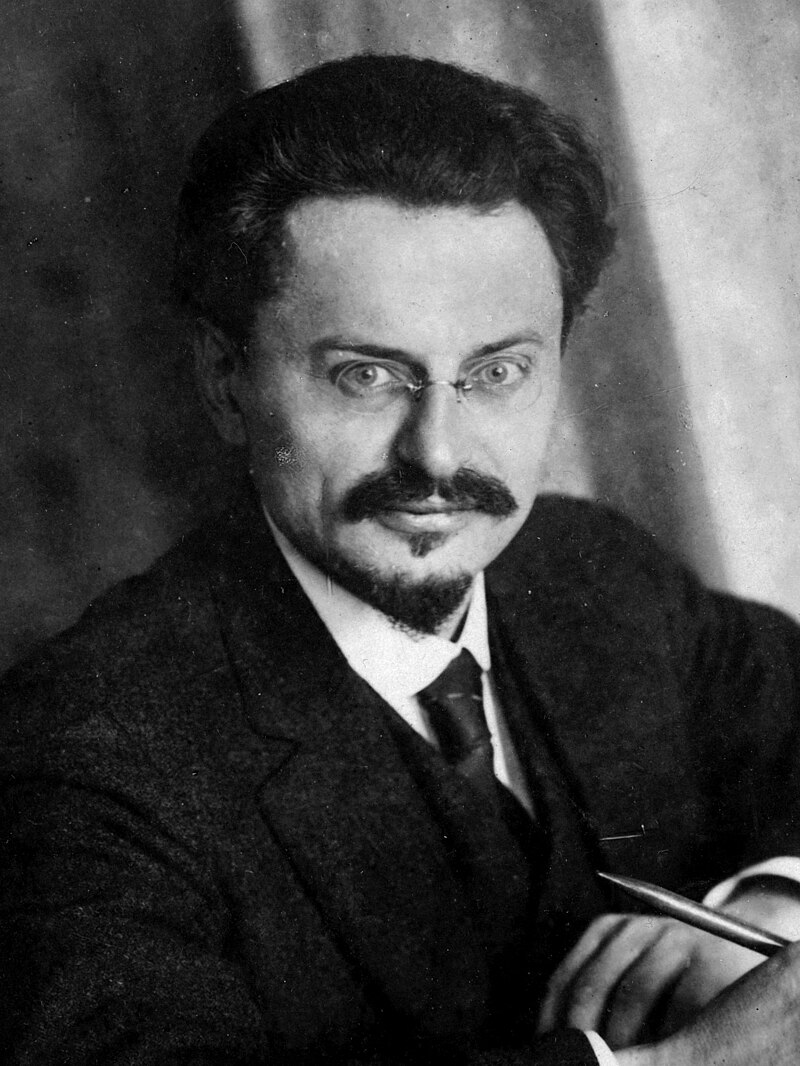
Leon Trotsky
Red Army Builder · 1879–1940
Brilliant orator, military genius, and theorist of "permanent revolution." Second only to Lenin in 1917. Built the Red Army that won the Civil War. Outmaneuvered by Stalin after Lenin's death, expelled from the party in 1927, exiled in 1929. Assassinated in Mexico City in 1940 by a Stalinist agent with an ice axe.
Josef Stalin
Georgian Revolutionary · 1878–1953
A bank robber and underground organizer before 1917, Stalin used his role as party secretary to build an unassailable bureaucratic empire. After Lenin's death, he outmaneuvered Trotsky, Zinoviev, Kamenev, and Bukharin through shifting alliances. By 1929 he was the unchallenged dictator of the Soviet Union.
Nicholas II
Last Tsar · 1868–1918
A devoted family man catastrophically unsuited to rule a vast empire in crisis. Weak-willed, isolated from reality, and constitutionally opposed to reform, he was outpaced by every challenge he faced. Canonized as a saint by the Russian Orthodox Church in 2000. Executed with his family in 1918.
Alexander Kerensky
Provisional Government · 1881–1970
A socialist lawyer who briefly held Russia's fate in his hands as head of the Provisional Government. His fatal decision to continue the war and delay land reform left him without a political base. Ousted by the Bolsheviks in October 1917, he fled to Paris and eventually the United States, dying in 1970 at age 89.
Felix Dzerzhinsky
Founder of the Cheka · 1877–1926
Polish revolutionary known as "Iron Felix." Lenin chose him to found the Cheka (secret police) in December 1917, making him the father of the entire Soviet security apparatus. His organization evolved into the OGPU, NKVD, and ultimately the KGB. His iron statue stood outside KGB headquarters until 1991.
Timeline · 1905–1924
1905
Revolution of 1905: Bloody Sunday, First Duma
Troops fire on peaceful petition marchers at the Winter Palace — Bloody Sunday. Nationwide strikes and mutinies follow, including the Battleship Potemkin revolt. Nicholas II issues the October Manifesto creating Russia's first parliament (Duma), buying temporary stability.
1914
WWI Begins — Russia Mobilizes 5 Million
Russia enters the First World War with patriotic enthusiasm that quickly sours. After catastrophic defeats at Tannenberg and the Masurian Lakes, the army is thrown into a war of attrition it cannot sustain. By 1916 Russia has suffered more casualties than any other combatant nation.
1916
Rasputin Murdered by Aristocrats
Prince Felix Yusupov and Grand Duke Dmitri Pavlovich murder Grigori Rasputin in December, poisoning him, shooting him, and finally drowning him in the Neva River. They hoped to save the monarchy from his malign influence. Instead, the scandal further discredited the Tsar's family.
Feb 1917
February Revolution: Tsar Abdicates
Bread riots, general strike, and military mutiny in Petrograd bring down the Romanov dynasty in days. Nicholas II abdicates on March 2 (new style). The Provisional Government and Petrograd Soviet compete for power — the brief experiment with liberal democracy begins.
Apr 1917
Lenin Returns — April Theses
Lenin arrives at Finland Station and immediately attacks the Provisional Government with his April Theses. "No support for the Provisional Government!" and "All power to the Soviets!" He demands immediate peace, land to the peasants, and banks to the state. The Bolsheviks have a revolutionary program.
Oct 1917
Bolshevik Revolution (October Revolution)
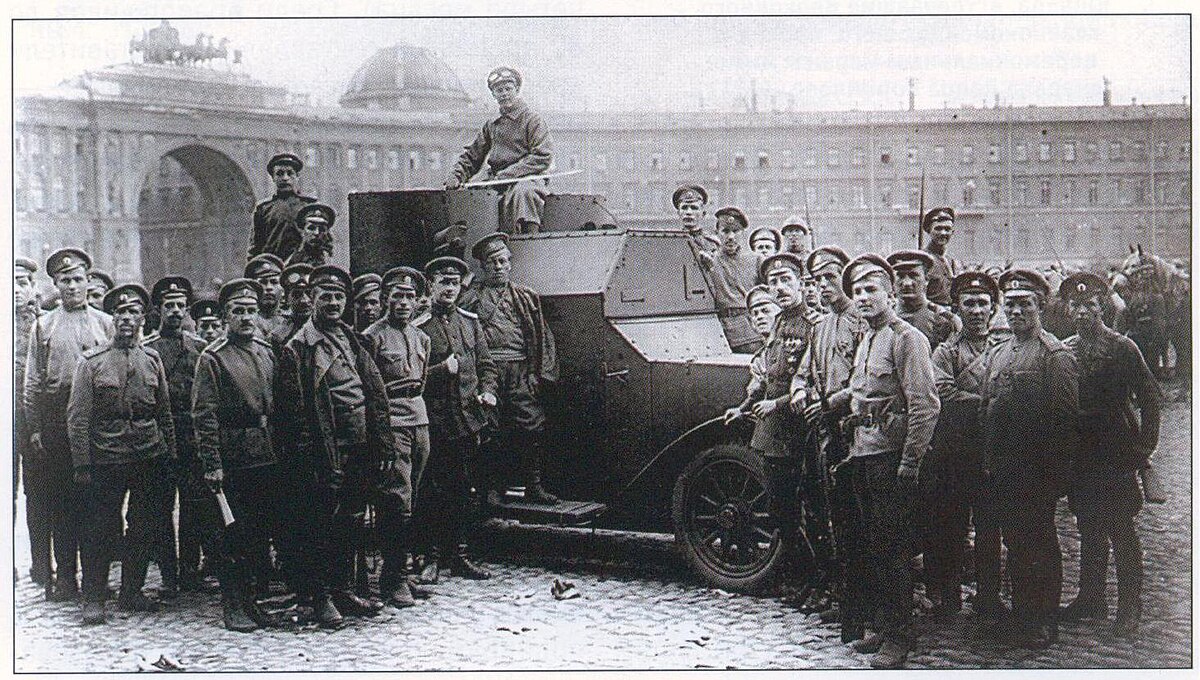
The Military Revolutionary Committee seizes Petrograd's key installations overnight on October 25-26. The Winter Palace falls. The Congress of Soviets approves Soviet power. Lenin announces the new government. The world's first communist state is born in a single night.
Jan 1918
Constituent Assembly Dissolved After One Day
Russia's democratically elected Constituent Assembly meets for the first and only time. When it refuses to simply ratify Soviet decrees, Bolshevik sailors dissolve it at gunpoint after 13 hours. Lenin's famous instruction: "The guard is tired." The brief democratic experiment in Russia ends.
Jul 1918
Romanovs Executed in Yekaterinburg
Nicholas II, Alexandra, Alexei, Olga, Tatiana, Maria, Anastasia, and four servants are shot in the basement of the Ipatiev House as White Army forces approach. The bodies are buried in secret. The last Tsar and his family are dead. The Romanov dynasty is extinguished after 304 years.
1918–21
Russian Civil War
Red Army vs. White Armies across Russia's vast territory. Fourteen foreign nations intervene on the White side. Famine, disease, and the Red Terror kill millions. The Bolsheviks ultimately prevail due to greater discipline, ideology, and Trotsky's military genius. Up to 12 million die from war, famine, and disease.
1921
New Economic Policy (NEP) — Tactical Retreat to Capitalism
With the economy in ruins from War Communism and a peasant famine killing millions, Lenin institutes the NEP — allowing limited private trade and market economics. "One step back, two steps forward," he explains. The economy begins to recover but ideological purists are appalled by the compromise with capitalism.
1922
USSR Officially Formed (December 30)
The Union of Soviet Socialist Republics is officially proclaimed, incorporating Russia, Ukraine, Belarus, and the Transcaucasian republics. The world's largest country has a new name and a new ideology. Stalin is appointed General Secretary of the Communist Party — a bureaucratic role he will transform into supreme power.
1924
Lenin Dies — Power Struggle Begins
Vladimir Lenin dies on January 21, aged 53, after a series of strokes that had incapacitated him since 1922. In his "Testament," written before death, he warned the party against Stalin and recommended his removal as General Secretary. The party suppressed the Testament. The power struggle between Stalin and Trotsky begins.
The Red Star
The Soviet red star — symbol of revolution, communism, and the five fingers of the working hand
Gallery — Photographs & Portraits
Vladimir Lenin, 1920
Lenin in 1920, two years before the strokes that would incapacitate him. Architect of the October Revolution and founder of the Soviet state.
Tsar Nicholas II
The last emperor of Russia, 1868–1918. Devoted father, catastrophic ruler. Executed with his family in Yekaterinburg on July 17, 1918.
Leon Trotsky, 1918
Commissar of War and builder of the Red Army. Trotsky's military genius was decisive in the Civil War. He was assassinated in Mexico City in 1940.
Grigori Rasputin
The Siberian mystic whose influence over Tsarina Alexandra — and apparent power over Tsarevich Alexei's hemophilia — made him the most hated man in Russia.
After the Capture of the Winter Palace
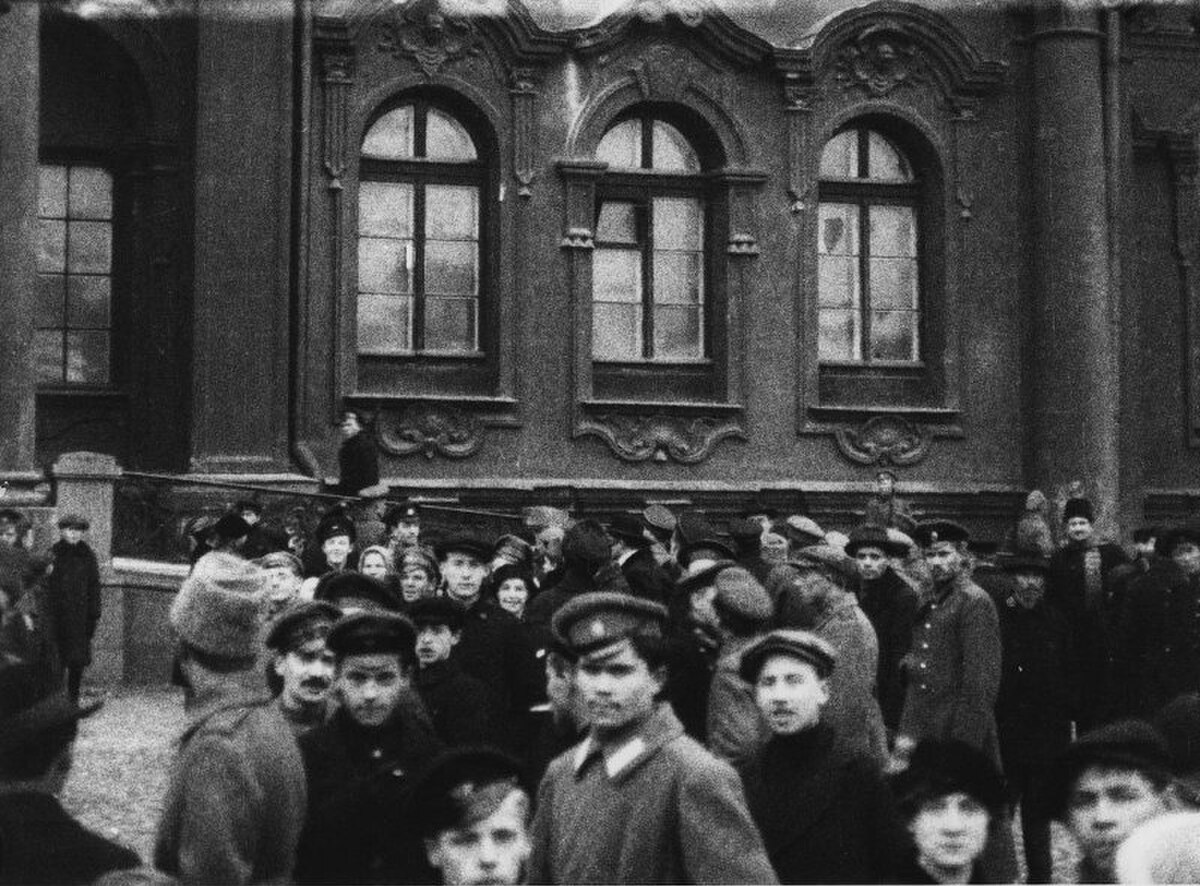
October 26, 1917. Red Guards inside the Winter Palace after the Bolshevik seizure. The Provisional Government had been arrested. Soviet power was proclaimed.
Bolshevik and Junker Soldiers, 1917
Armed Bolshevik workers and soldiers at the Palace Square during the October Revolution, October 25–26, 1917.
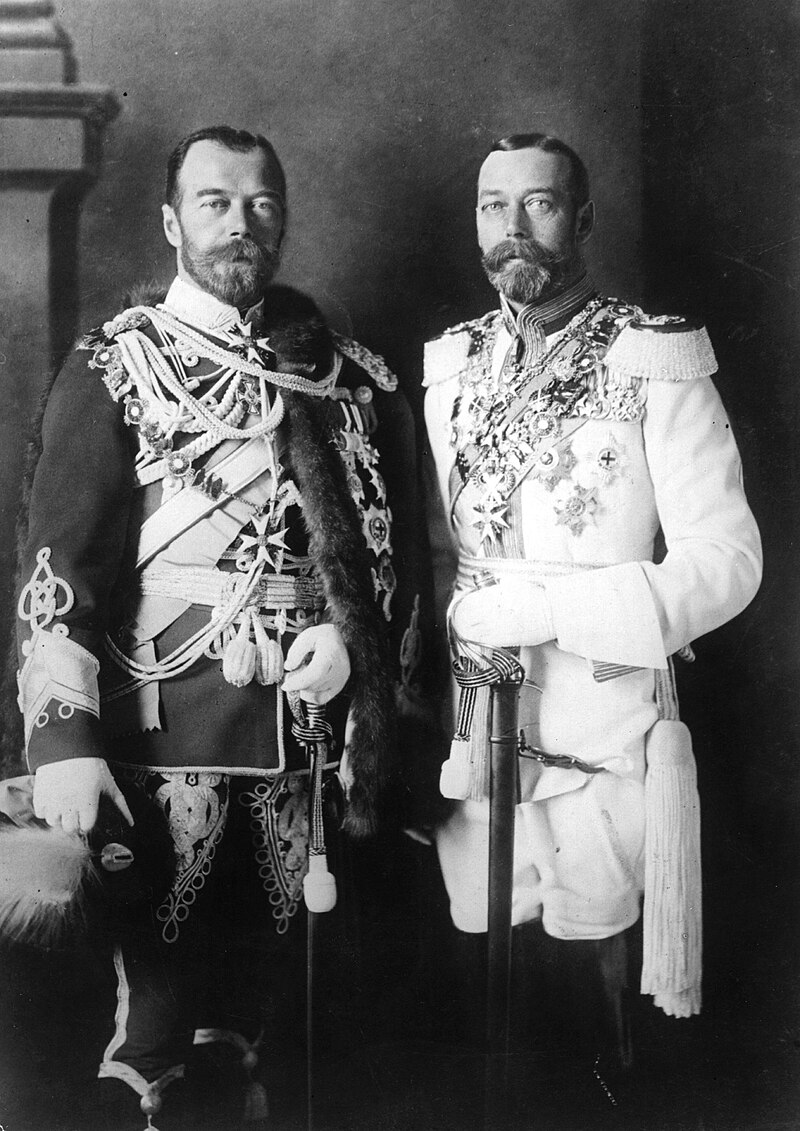
Nicholas II & King George V, 1913
The two monarchs — first cousins — at a Berlin meeting in 1913. They bore a striking physical resemblance. George V refused asylum to Nicholas after the revolution.
Women's Death Battalion
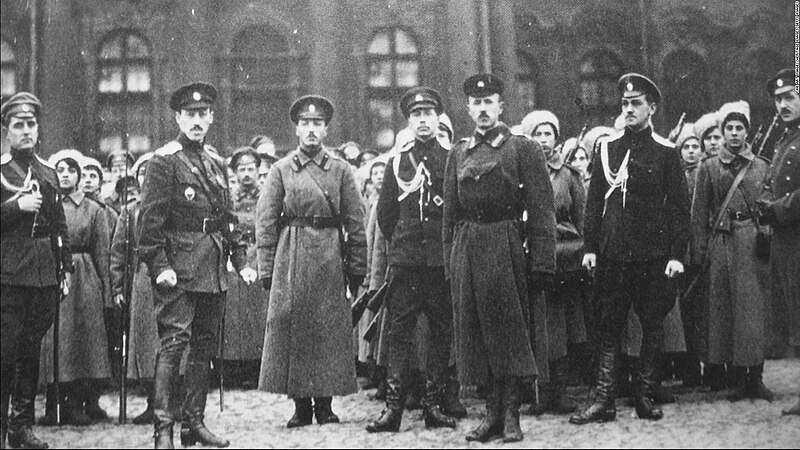
The Women's Battalion of Death marching before the Winter Palace in 1917. One of the last units defending the Provisional Government during the October coup.
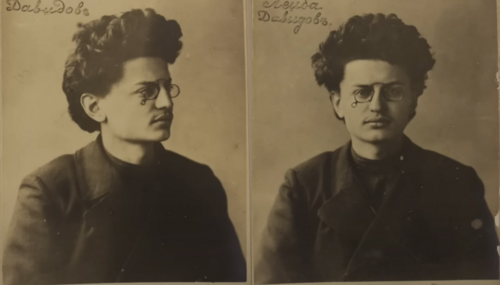
Trotsky Police Mugshot, 1905
Leon Trotsky's arrest photo from the 1905 Revolution. He was imprisoned in the Peter and Paul Fortress but escaped into exile, beginning a life of revolutionary wandering.